Global Missions
Bahamas 2025: What a Short-Term Trip Should Actually Look Like
Wings of Grace Ministries · July 9, 2025 · 4 min read · 10 reads
Short-term mission trips have earned a fair amount of criticism, and much of it is deserved. Teams arrive for a week, build something a local crew could have built better and cheaper, take photographs with children whose names they never learn, and fly home changed while the community is largely unchanged.
We took a team to the Bahamas in July 2025. We tried hard not to do that. Here is what we did instead, and what we would change.
Start with who is already there
Our team did not arrive with a project. We arrived with a partner — a local church that has been working in its community for years, that knows every family on the street, and that will still be there in a decade when our team is a memory.
Every task our team touched came from their list, not ours. That single decision determines almost everything else about whether a trip helps.
It also means accepting that you may be handed work that is unglamorous. Our team's assignments included repairing a roof, painting a fellowship hall, sorting a donated supply room, running a five-day children's program, and — for two full days — moving debris. Nobody's social media highlight is a debris pile. It was what was needed.
Prepare longer than you travel
We spent four months preparing for eight days. Team members met monthly for cultural orientation, expectation-setting, safety training, child-protection policy, and honest conversations about motive.
The most useful preparation session was the one where we discussed what our team was not qualified to do. We are not builders of permanent structures. We are not medical providers. We are not experts in Bahamian culture, history, or church life. Naming the limits ahead of time prevented a lot of well-intentioned harm.
We also required every team member to raise their own support and to write to their supporters twice: once before, once after. Being accountable to people who funded you changes how you carry yourself on the ground.
What the week actually looked like
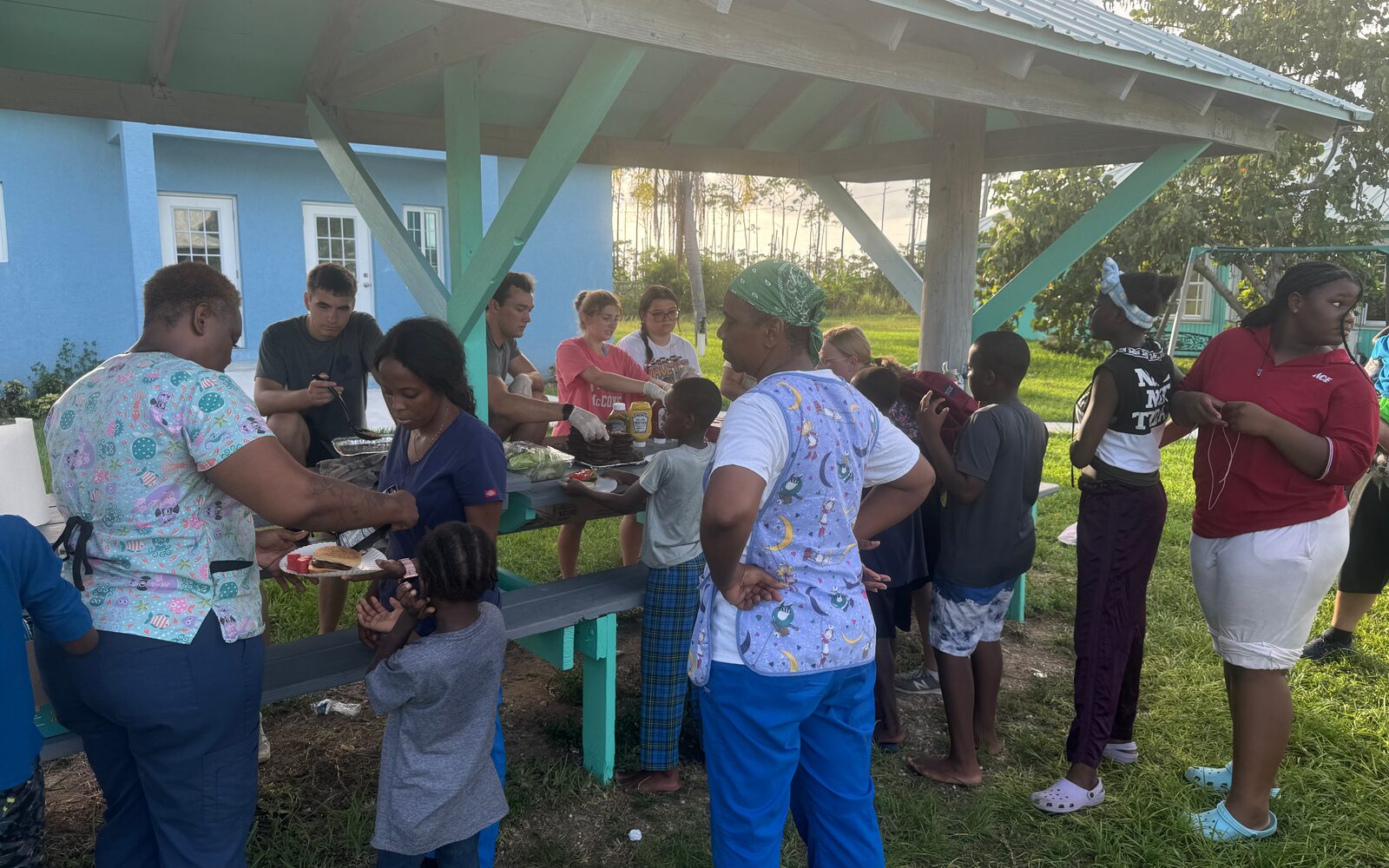
Mornings were work. Afternoons were the children's program. Evenings were debrief, and the debriefs were where the trip did most of its work on our team.
Our students — several of them from our aviation and housing programs — spent those evenings processing things they had never had to think about. Why does a community two hundred miles from Florida have this infrastructure and ours has that? What does it mean that we can leave and they cannot? What do you do with the feeling of being useful for a week and then going home?
Nobody arrived at tidy answers. That was fine. Questions held honestly are worth more than answers handed out.
The rules we kept
No photographs of children without explicit permission from a guardian, and none used for fundraising. A child is not a marketing asset.
No cash handed out individually. Support flows through the partner church, which knows the situations we do not.
No promises we cannot keep. Not one team member was permitted to tell anyone "we will be back next year" or "I will send you something." Broken promises from foreigners are their own kind of damage.
Local leadership leads. Our team took direction. When the pastor said stop, we stopped, even mid-task.
What we would change
The children's program was too big. We ran it for more kids than we could know by name. Next time, fewer children and more depth.
We over-scheduled. The most valuable moments of the week — a long conversation on a porch, an unhurried meal — happened in the gaps, and we had almost no gaps. We are building in margin next year.
Our follow-through was slow. The partner church asked for two specific things after we left, and we took longer than we should have to deliver them. The trip does not end when the plane lands.
Does it accomplish anything?
Honestly evaluated: the material impact of one week of unskilled labor is modest. We are clear-eyed about that.
What a well-run trip does accomplish is relational and long-term. It deepens a partnership that operates year-round, most of it funded and executed locally. It exposes young people from our programs to a world larger than their circumstances, which changes what they believe is possible for their own lives. And it produces donors and volunteers who stay engaged for years because they have met the people involved.
That is worth doing — if, and only if, the trip is designed around the people who live there rather than the people visiting.
Going in 2026
Applications for the 2026 team open in January. Expect a longer preparation season, a smaller team, more margin, and the same partner church.
If you come, come to take direction. That is the whole job.
Share this story
Copy the link and send it to someone who should read it.